FATI FATI
Leather accessories have long been symbols of craftsmanship, durability, and timeless style. From wallets and belts to handbags and keychains, leather items are both practical and luxurious.Leather accessories industry Making leather accessories is not only a traditional craft but also a creative process that blends artistry, precision, and patience.
1. Choosing the Right Leather
The first and most crucial step in making leather accessories is selecting the right type of leather.Leather accessories industry Different types of leather have different textures, durability, and flexibility. For example:
- Full-grain leather is known for its strength and natural texture.
- Top-grain leather offers a smoother surface and is slightly more processed.
- Genuine leather is affordable but less durable.
- Suede is soft and stylish, ideal for interior linings or fashionable accessories.
The choice of leather depends on the product being made and the desired look and feel.
2. Cutting and Shaping
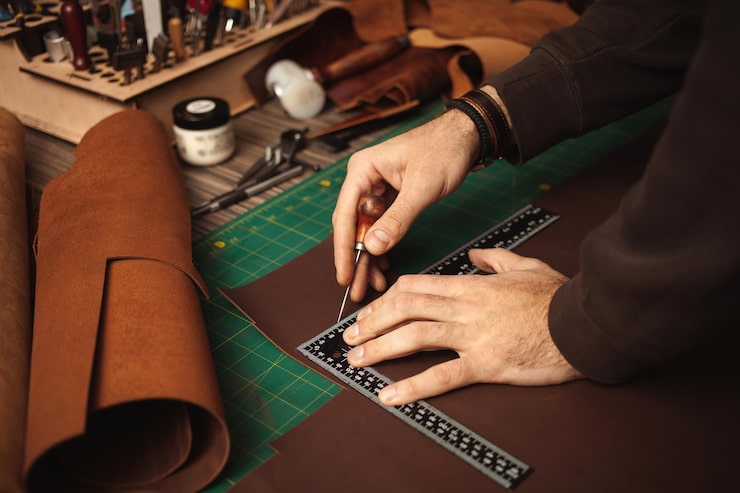
After selecting the leather,Leather accessories industry the craftsman marks patterns using templates or stencils. Sharp cutting tools such as rotary cutters or knives are used to shape the leather pieces precisely.Leather accessories industry Accuracy in this step ensures that the pieces fit together perfectly during assembly.
3. Edging and Finishing
The edges of the leather are carefully beveled, burnished, or polished to give a clean and professional appearance.Leather accessories industry This process often involves applying edge paint or wax and using a burnishing tool to smooth the sides.
4. Stitching and Assembly
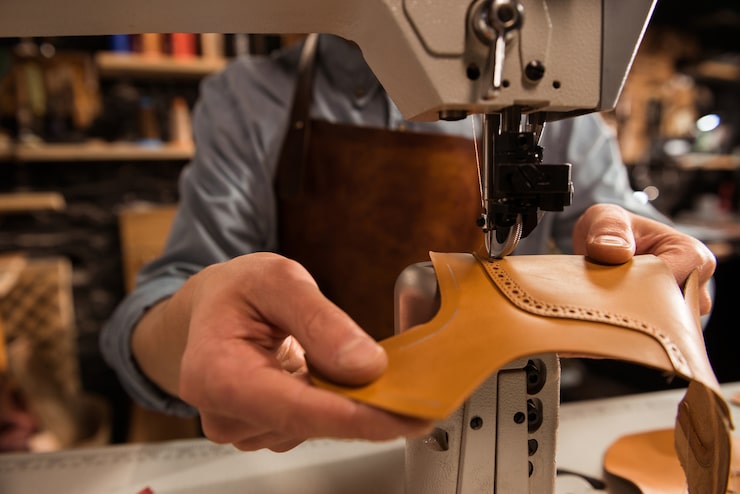
High-quality stitching is a hallmark of skilled leatherwork. Traditional hand-stitching uses waxed thread and leather needles, while modern production may use sewing machines designed for thick materials. The parts are stitched together following the design, ensuring both strength and elegance.
5. Adding Hardware and Details
Metal components such as zippers, buckles, buttons,artistry and rivets are attached during this stage. The selection of hardware plays a significant role in the overall design and durability of the accessory. Many artisans also stamp their logo or personalize the item with embossing techniques.
6. Polishing and Finishing Touches
The final step is applying leather conditioner, wax, or oil to protect and enhance the leather’s surface. This not only adds shine but also increases the product’s longevity.Leather accessories industryLeather accessories industry The finished accessory is then carefully inspected to ensure high quality.
Table: Overview of Leather Accessory Making Process
| Stage | Description | Tools/Materials Used | Purpose |
|---|---|---|---|
| 1. Leather Selection | Choosing type and quality of leather | Full-grain, top-grain, suede, genuine leather | Determines texture, durability, and style |
| 2. Cutting and Shaping | Marking and cutting leather pieces accurately | Cutter, ruler, stencil, rotary knife | Creates the base shapes for the accessory |
| 3. Edging and Finishing | Smoothing and sealing the edges | Burnisher, edge paint, wax | Improves appearance and prevents fraying |
| 4. Stitching | Sewing pieces together manually or by machine | Waxed thread, needle, stitching awl, machine | Provides structure and durability |
| 5. Hardware Attachment | Adding metal components or decorative elements | Rivets, buckles, snaps, zipper tools | Enhances function and aesthetic appeal |
| 6. Final Polishing | Conditioning and finishing surface for protection and shine | Leather conditioner, cloth, wax | Preserves leather and adds a refined finish |
Conclusion
Creating leather accessories is a meticulous and rewarding craft that combines traditional techniques with modern design.Leather accessories industry Each piece tells a story of skilled hands and creative vision.Leather accessories industry Whether handmade or produced in small workshops,artistry leather accessories continue to be cherished for their quality, durability, and timeless beauty.
Would you like me to adapt this article for a blog post (with SEO keywords and headings) or keep it in this informative style?
Vous avez dit :
I want it longer
ChatGPT a dit :
Perfect 👍 Here’s a longer, in-depth article in English about making leather accessories, written in a professional and engaging tone — ideal for blogs, reports,Leather accessories industry or educational use.Leather accessories industry It includes detailed explanations, examples, and an organized table at the end.
The Craft of Making Leather Accessories
Leather accessories are among the most admired handmade products in the world. They reflect elegance, durability, and timeless craftsmanship. From belts and wallets to handbags, watch straps, and phone cases, leather items are deeply rooted in human culture and artistry.artistry The process of creating these accessories is a journey that involves tradition, creativity, and precision.
1. The History and Significance of Leather Craftsmanship
Leatherwork is one of the oldest human crafts, dating back thousands of years.Leather accessories industry Ancient civilizations such as the Egyptians, Greeks, and Romans used leather for clothing,artistry armor, and decorative accessories. Over time, the art evolved,Leather accessories industry combining functionality with luxury.
In today’s fashion and design industries, handmade leather accessories are highly valued because they offer individuality and authenticity — something that mass production cannot fully replicate.Leather accessories industry Every piece of leather carries a natural pattern and texture, making each item unique.
2. Types of Leather Used in Accessories
Different types of leather are selected depending on the accessory’s purpose and design. The main varieties include:
- Full-Grain Leather: The highest quality and most natural type. It retains the grain and imperfections of the hide,Leather accessories industry which add character and beauty over time. Commonly used in premium bags, belts, and wallets.
- Top-Grain Leather: Slightly sanded and treated for a smoother, uniform finish.artistry It’s more resistant to stains and commonly used for stylish accessories.
- Genuine Leather: A lower grade made from layers of leftover hides. It’s affordable but less durable, often used in budget-friendly accessories.
- Suede: Made from the underside of the hide,artistry it’s soft and flexible,Leather accessories industry ideal for fashion-forward accessories like handbags and shoes.
- Patent Leather: Treated with a glossy coating that gives a shiny, polished appearance, often used in luxury fashion.
Each type of leather reacts differently to cutting, dyeing, and stitching,artistry which is why skilled craftsmen choose the right material carefully before starting.
3. The Tools of the Trade
Leathercraft requires a combination of traditional hand tools and modern machinery. Essential tools include:
- Cutting tools such as knives, rotary cutters, and shears.
- Punches and chisels for making holes and decorative patterns.
- Needles and waxed thread for stitching.
- Edge bevelers, burnishers, and rollers for finishing.
- Mallets and hammers for assembling metal parts.
- Dyes, conditioners, and sealants for coloring and protection.
An experienced craftsman not only knows how to use these tools but also understands the characteristics of each leather type to achieve the best result.
4. Step-by-Step Process of Making Leather Accessories
The creation of leather accessories is a detailed process that demands time and precision.artistry Below is an overview of the key steps:
Step 1: Designing the Product
The process starts with an idea. Designers create sketches or digital patterns showing dimensions, stitching lines, and placement of hardware. A prototype may be made using cheaper material before working on the real leather.
Step 2: Selecting and Preparing the Leather
Once the design is ready, the artisan chooses the appropriate type, thickness,artistry and color of leather. The leather is cleaned,artistry moistened, and sometimes treated with softeners to improve flexibility.
Step 3: Cutting the Leather
Using patterns or stencils, the leather pieces are cut precisely.artistry Accuracy is essential because leather is expensive and mistakes can waste material. Artisans often cut by hand for greater control.
Step 4: Edging and Skiving
The edges are thinned (a process called skiving) to make them easier to fold or stitch.artistry The craftsman then bevels and burnishes the edges for a smooth, polished look.
Step 5: Stitching
The pieces are joined using either saddle stitching (a strong hand-sewn technique) or machine stitching. Hand-stitching takes longer but produces durable, aesthetic seams.
Step 6: Dyeing and Finishing
Some items are dyed or polished after stitching. Finishing treatments, including oils or waxes, enhance the leather’s color, texture, and water resistance.
Step 7: Adding Hardware
Metal parts like zippers, snaps, rivets, and buckles are added.artistry These not only improve functionality but also give the accessory a stylish touch.
Step 8: Quality Control
Before the product is sold, it’s inspected for imperfections in stitching, symmetry, and finishing. Only items that meet high-quality standards reach customers.
5. The Role of Craftsmanship and Design
The beauty of handmade leather accessories lies in the balance between function and form. Each craftsman leaves a personal touch in their work — from the pattern of stitching to the way edges are polished.Leather accessories industry Many artisans brand their work with unique stamps or logos to mark authenticity.
In addition,artistry modern designers often combine traditional techniques with innovative designs, creating pieces that appeal to both classic and contemporary tastes.
6. Sustainability and Ethical Production
Today, the leather industry faces growing attention to sustainability. Eco-conscious brands use:
- Vegetable-tanned leather made with natural tannins from plants instead of chemicals.
- Recycled leather from scraps and waste materials.
- Ethically sourced hides that come as byproducts of the food industry.
These methods help reduce environmental impact and appeal to consumers who value sustainability.
7. Applications and Popular Leather Accessories
Leather is a versatile material used in a wide range of products, including:
- Wallets and purses
- Belts and straps
- Handbags and backpacks
- Watch straps
- Keychains
- Passport covers
- Laptop sleeves and phone cases
Each item requires different techniques depending on its size,Leather accessories industry flexibility,artistry and purpose.
8. Challenges in Leatherwork
While rewarding, leatherwork can be demanding. Common challenges include:
- Maintaining consistent stitching and measurements.
- Preventing scratches or marks on soft leather.
- Ensuring the right tension when stitching thick materials.
- Mastering edge finishing for professional appearance.
Patience and attention to detail are essential qualities for every leatherworker.
9. The Future of Leather Crafting
With the rise of technology, digital design tools, and laser cutting, the leather industry continues to evolve. YetLeather accessories industry, handmade craftsmanship remains irreplaceable. Consumers still appreciate the authenticity, smell, and texture of natural leather — qualities that machines cannot fully reproduce.
Many modern workshops now blend both worlds: using machines for precision cutting while preserving hand-finishing traditions for beauty and soul.
Table: Summary of Leather Accessory Making Process
| Stage | Description | Tools/Materials Used | Purpose |
|---|---|---|---|
| 1. Designing | Planning shapes, dimensions, and styles | Sketches, templates, CAD software | Defines structure and design concept |
| 2. Leather Selection | Choosing appropriate type and quality of leather | Full-grain, top-grain, suede, genuine leather | Ensures strength, texture, and durability |
| 3. Cutting and Shaping | Cutting leather pieces according to patterns | Knife, stencil, cutting mat | Creates base structure of the product |
| 4. Edging and Skiving | Thinning and smoothing edges for neat folds and stitches | Skiver, beveler, burnisher, wax | Enhances look and handling quality |
| 5. Stitching | Sewing the leather pieces together | Needles, waxed thread, stitching machine | Provides strength and beauty to the seams |
| 6. Hardware Attachment | Adding metallic parts and decorations | Rivets, snaps, buckles, zippers | Increases functionality and style |
| 7. Finishing & Polishing | Conditioning and sealing leather for protection | Oils, wax, cloth, conditioner | Adds shine, color depth, and longevity |
| 8. Quality Control | Inspecting for defects and ensuring craftsmanship | Inspection tools, magnifier | Guarantees top-quality final product |
Conclusion
The art of making leather accessories is a blend of tradition, patience, and creativity. Each stage — from leather selection to finishing — contributes to the uniqueness of the final piece. Handmade leather items are not just accessories; they are works of art that reflect the passion and skill of their creators.
In an era of fast fashion, leather craftsmanship continues to stand as a symbol of authenticity, durability, and timeless beauty. Whether it’s a handcrafted wallet, a custom belt,Leather accessories industry or an elegant handbag, every leather accessory tells a story — one of human touch, artistry, and lasting value.
Would you like me to format this article into a PDF or Word document (with title page and clear sections)? I can prepare it for printing or presentation.